
 Full Editorial
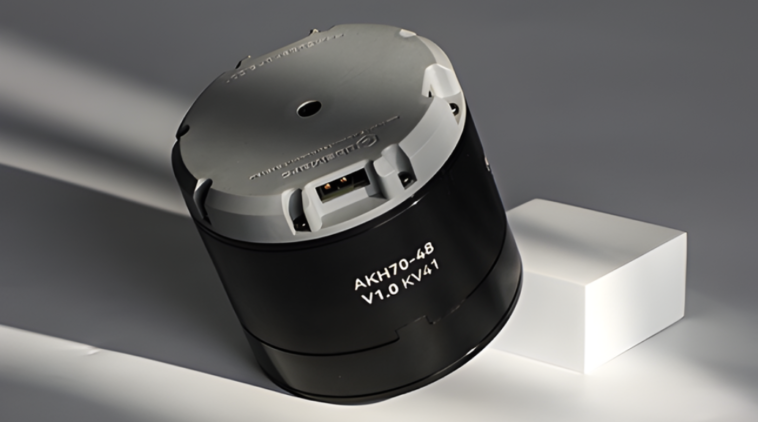
Modern robotics requires motion systems that are precise, fast and reliable, but without unnecessary complexity. Actuators directly affect the movement quality and control accuracy in various areas, such as robotic arms, exoskeletons, quadruped robots, and automated equipment. With the ongoing development of robotics, integrated actuation solutions help simplify mechanical design and enhance overall performance. Today’s robotic actuators are a combination of several key elements into a single, compact package, making advanced motion control more accessible for both industrial and research applications.
Why Integrated Actuation Is Transforming Robotic Motion
Traditional robotic motion systems typically use individual motors, gearboxes, encoders, drivers, and controllers. Although useful, these multi-component assemblies add to wiring complexity, installation time, maintenance needs and synchronization issues.
This architecture can be simplified by using integrated robotic actuators, which integrate critical motion-control components into a single compact module. This leads to a much cleaner mechanical design, fewer external connections, and more efficient power transmission throughout the robotic system.
CubeMars has embraced this integrated design approach, creating actuator platforms that integrate brushless DC motors, precision planetary gearboxes, encoder systems and intelligent drive electronics into compact solutions. This makes it easier for the engineers to concentrate on the functionality of the robot instead of combining several separate motion components.
Precision Begins with the Robotic Joint Actuator
The Robotic Joint Actuator is the mechanical and control hub of all moving robotic joints. It is not just a rotational force generator, but a simultaneous torque output, position feedback, velocity regulation and motion stability device.
Today’s robot joints require accurate motion, even with varying loads. Each joint has to react properly without vibrating or lagging, whether lifting, walking, balancing or executing repetitive industrial tasks.
This is accomplished with integrated actuator modules, which integrate high-performance brushless motors with planetary reductions and dual encoder feedback. Robotic systems can switch between multiple closed-loop control modes (position, speed, torque, hybrid) to adjust for varying operating conditions and ensure smooth motion.
Advanced adaptive PID tuning also makes the configuration easier by automatically optimizing the control parameters. This decreases the amount of commissioning effort and increases consistency on multi-joint robotic platforms.
Compact Design Simplifies Installation and System Architecture
Miniaturization, weight reduction, and capability enhancement have made space efficiency a critical issue in the design of robots. Compact actuator modules save mechanical space without compromising performance.
An important innovation is the hollow-shaft actuator design that enables the internal routing of the cable through the actuator. Cables go through the center of the actuator to avoid routing around moving joints, thereby providing cleaner assemblies and avoiding interference with moving components.
Additional features commonly found in advanced actuator modules include:
-
Integrated brushless motor, gearbox, encoder, and drive electronics
-
Hollow-shaft construction for internal cable management
-
High torque density within a compact footprint
-
Dual communication interfaces for multi-actuator networking
-
Flexible installation across different robotic configurations
These design improvements help simplify mechanical integration while supporting cleaner and more serviceable robotic systems.
Intelligent Control Creates More Predictable Motion
Movement generation is not the only aspect of robotic performance. Stable, repeatable and responsive motion demands intelligent control algorithms to work in conjunction with accurate sensor feedback.
Today’s robotic actuators often are capable of multiple modes of operation to enable the use of the most appropriate control strategy for a given application. Position control is used for accurate joint positioning; torque control can control the interaction forces; speed control can be used to control the continuous movement; and hybrid modes can be used to control multiple control objectives at once.
Closed-loop corrections are made during operation as the high-resolution encoder feedback constantly monitors the position of the motor and the output shaft. To increase the accuracy of the measurement and the precision of overall control, some actuator designs use a dual encoder system.
Integrated drive electronics also make operation easy, with such functions as intelligent parameter identification, adaptive PID configuration, real-time monitoring, and overcurrent, overvoltage, undervoltage and overheating protection. These capabilities can enhance operational stability with less manual tuning.
Choosing the Right Robot Joint Module for Different Applications
The choice of Robot Joint Module is based on the mechanical structure and load requirement of the robot, the motion profile, and the environment. Actuator selection is a critical engineering choice because different robotic systems have different performance characteristics.
Applications commonly benefiting from integrated robotic joint modules include:
-
Collaborative robotic arms requiring smooth multi-axis motion
-
Exoskeleton systems demanding lightweight, high-torque actuation
-
Quadruped robots requiring synchronized joint movement
-
Automated industrial equipment performing repetitive positioning
-
Mobile robotic platforms needing compact and efficient power transmission
Actuator families are also available with different gear reduction ratios, torque capacities, communication interfaces, and structural designs. For instance, some modules have a focus on very high torque density for articulated joints, and others on greater radial load carrying ability for wheeled robots and automated guided vehicles.
Matching actuator characteristics with application requirements helps achieve reliable performance without unnecessary oversizing.
High Torque Density Supports More Efficient Robotic Performance
As robotics evolves, there is a growing need for greater performance in smaller mechanical packages. A high torque density enables actuators to achieve a high output force in a small and light design.
Planetary gearbox technology has a significant contribution to play in this balance. Precise reduction systems increase torque, while maintaining smooth rotational qualities and maximum power transmission.
But today there are a number of integrated actuator platforms that provide great torque in a small package. Some actuator modules deliver high peak torque for demanding robotic joints and at the same time low system weight, depending on the configuration. Other models emphasize high joint velocities, which are suitable for dynamic robotic applications that demand high acceleration and sensitive control.
System efficiency is also provided by communication capability. Multiple actuators can be made to coordinate their movements with reduced wiring complexity, as dual CAN interfaces, UART communication and daisy-chain networking facilitate integration into larger robotic architectures.
Building Future-Ready Robotics Through Smarter Motion Systems
The intelligence, modularity, and mechanical efficiency of robotics are continuing to progress. With the growing abilities of robots, motion systems must provide precision, reliability and flexibility without adding to engineering complexity.
This evolution is enabled by highly integrated actuator platforms that decrease the number of components, increase installation efficiency, enhance control accuracy, and simplify maintenance. Adaptive PID tuning, multi-loop control, dual encoder feedback, built-in protection, and a small physical design contribute to the development of robotic platforms that can be used for increasingly complex tasks.
CubeMars remains a part of this advancement with their lineup of robotic power solutions that integrates in-house motor development, planetary actuator technology, and integrated control systems for a variety of applications from humanoid robots and collaborative robotic arms to exoskeletons, quadrupeds, and industrial automation.
Conclusion
Powerful motors are no longer the only way to provide motion in robots. Today, intelligent control, compact mechanical design, precise feedback sensing, and efficient power transmission are all integrated into a single package by advanced actuator technology that makes robot design easy. These range from hollow shaft actuator modules that incorporate internal cable routing to high torque integrated joint systems with adaptive control, both of which simplify systems and enhance performance. Well-designed integrated actuators offer the precision, responsiveness and reliability necessary to convert complex motion to simple and efficient control as robotics penetrates into more demanding applications.
For more coverage on this topic, see related articles on our publishing site.