
 Full Editorial
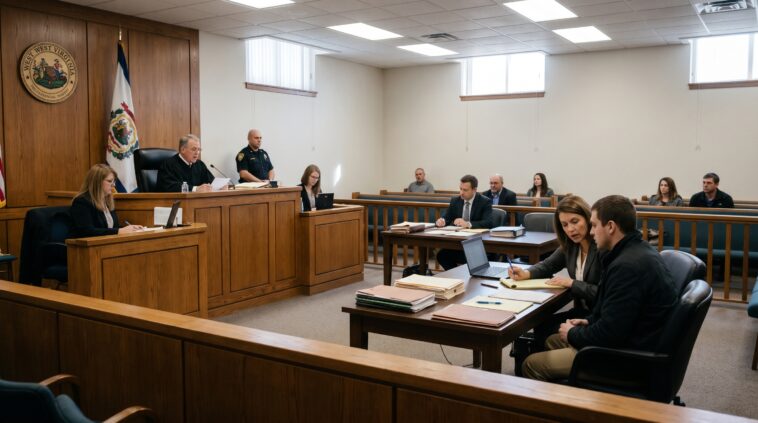
Felony cases remain a central part of the U.S. criminal justice system. The U.S. Courts continue to publish data on felony filings, pending cases, and dispositions in federal district courts.
According to the National Conference of State Legislatures (NCSL), 24 states have amended their constitutional bail provisions to allow preventive detention under certain circumstances. This includes specific serious charges or findings that a defendant may pose a danger to others.
A felony charge does not mean a person is guilty or will be convicted. Defendants have several constitutional and legal rights designed to protect them throughout the pretrial process, before a criminal case goes to trial. But what is a pretrial felon in WV or other states?
A pretrial felon is a person charged with a felony who is awaiting trial but has not yet been convicted. The term applies in West Virginia and other states, and the person is legally presumed innocent until proven guilty.
Let’s take a look at the rights defendants have during felony pretrial proceedings and how these protections work.
What a Felony Charge Does and Does Not Mean
The individual who is accused of a felony crime is yet to be convicted. A number of individuals refer to this defendant as the “pretrial felon,” but this is just a term used to describe an aspect of the process rather than someone who is guilty of the charge.
The presumption of innocence applies to all hearings that occur prior to trial, and most of the rights described below are meant to preserve this. The first hearing is usually the initial appearance, and the arraignment follows once a formal charge is filed.
The Right to a Lawyer
As per the Sixth Amendment, an individual is entitled to the right to counsel. The federal judicial system has a program known as “Defender Services,” which is meant to secure the rights for those who are unable to afford a lawyer.
And securing timely appointed counsel for all eligible defendants is one of their objectives. In each state, there are separate programs for public defense. A defendant who cannot afford a lawyer does not have to go without one.
Release, Bail and Detention
The law assumes that the defendant will be released pending trial. However, the prosecution can seek detention by showing that no release conditions would reasonably assure the defendant’s appearance or public safety, and some serious charges carry a presumption of detention, and the court determines the least restrictive conditions to ensure appearance at court proceedings and safety of the public.
Pretrial services officers provide risk assessment information to the court based on the defendant’s criminal background, employment, housing, and attendance at court proceedings. Each state determines its own bail procedure, hence the defendant in a state case is governed by the state procedure and not the federal procedure.
The discovery process and the pretrial motions follow a particular order. The discovery process enables the defense to know what the prosecution intends to present in court. In addition, there are pretrial motions that enable the defense to challenge the way the evidence is collected and whether the evidence should be admitted to a jury during the trial.
When a pretrial ruling excludes key evidence, the prosecution’s case may become weaker.
Firm websites give a rough picture of who handles felony work in a given state. According to the Georgia criminal defense firm website https://www.mnbjustice.com/, the firm practices only criminal defense from its McDonough office and lists violent felonies, drug crimes, sex crimes, and white-collar cases among its areas, along with more than 100 jury trials in its own account of its experience.
Time Limits Before Trial
The Sixth Amendment also provides for a timely and open trial, but individual states have additional time limitations.
In West Virginia, for example, the state legislature has a statute providing that where there is an indictment for a felony, if three regular terms of court have passed after the term of the indictment without a trial, the person charged is discharged from prosecution.
The statute lists several exclusions. This includes continuance granted on the defendant’s motion, the defendant’s escape from jail or failure to appear according to a recognizance, the defendant’s insanity, unavailable state witnesses, and a jury that cannot agree on a verdict.
Things like these keep changing because courts and legislatures update their rules and procedures; hence, what may have been true a few years ago might not be accurate anymore.
The most up-to-date version of the rule is found on the official website of the court and legislature of that particular state, and it includes the exact dates for each hearing, deadlines, and exceptions that are applicable to the ongoing felony trial.