
 Full Editorial
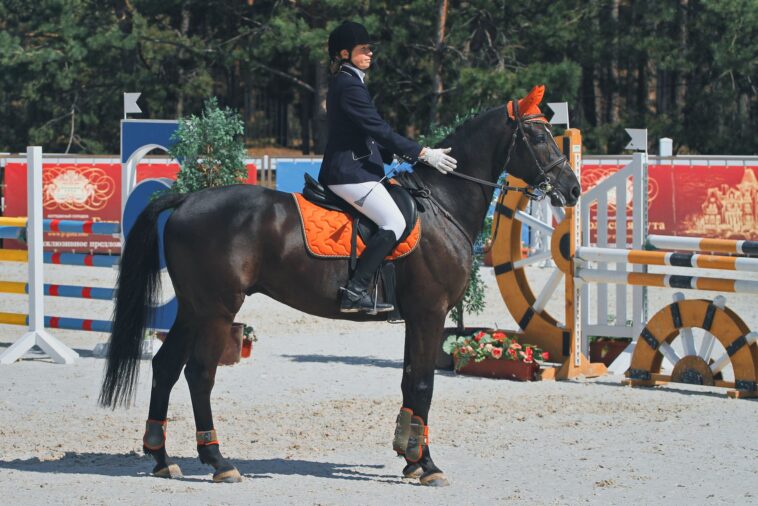
Equestrian sports place exceptional demands on both rider and horse, requiring equipment that performs safely and effectively across a range of conditions and disciplines. From riding helmets and body protectors through saddles, bridles, and horse clothing to arena maintenance equipment, the equestrian market encompasses a remarkably wide range of specialist products that directly affect the safety, comfort, and performance of both horse and rider.
At lfequestrian.com you will find a comprehensive equestrian sports and horse riding equipment resource covering rider safety, horse tack and clothing, arena and yard equipment, and all the guidance that helps riders and horse owners make informed equipment choices across every discipline and level.
Rider Safety Equipment: Helmets and Body Protectors
Rider safety equipment is the most critically important category of equestrian purchasing. Head injuries are the leading cause of equestrian fatalities and serious injuries, and a correctly fitted helmet that meets current safety standards is the most important single investment a rider can make in their safety.
Equestrian sport includes the sports of dressage, show jumping, and eventing as defined by the FEI (Federation Equestre Internationale). Helmet standards have evolved significantly over the past decades, with current standards providing substantially better protection than older designs. Helmets should be replaced after any significant impact, even if no visible damage is apparent, and should be replaced on a five-to-ten year cycle regardless of apparent condition, as the foam inner liner degrades over time.
Body protectors provide protection against crushing injuries from falls and kicks, and are mandatory in cross-country eventing at all levels. The BETA (British Equestrian Trade Association) standard provides a framework for understanding protection levels across different disciplines and risk environments.
Saddles and Fitting
The saddle is the single most significant tack investment most riders make, and correct saddle fitting for both horse and rider is essential for both comfort and performance. An incorrectly fitted saddle restricts the horse’s movement, causes discomfort that contributes to behavioural issues, and can cause lasting physical damage.
Saddle fitting should be performed by a qualified saddle fitter who assesses both the horse’s conformation and back shape and the rider’s position and balance requirements. The saddle should be re-checked regularly, particularly following changes in the horse’s condition, weight, or musculature.
Bridles, Bits, and Headwear
Bridle and bit selection reflects both the discipline and the individual communication requirements of horse and rider. The range of available bit types reflects the extraordinary diversity of horses’ responses to different pressure and contact approaches, and finding the right bit for a specific horse requires both knowledge of bit mechanics and sensitive observation of the horse’s response.
Horse Clothing and Rugs
Horse clothing encompasses a wide range of functional and weather protection garments, from stable rugs and turnout rugs through fly rugs and competition sheets. Selecting appropriate weights and designs for the specific horse’s housing situation, the climate, and the management system in use requires understanding both the horse’s individual thermoregulation and the conditions it will encounter.
Yard and Arena Equipment
Yard and arena maintenance equipment, including arena surfaces, jumps, poles, and training aids, represents a significant investment for facilities at every level. Choosing appropriate surfaces for the intended disciplines and maintenance regime, and selecting jumps and training equipment that are safe and fit for purpose, creates the physical foundation for effective equestrian training.