
 Full Editorial
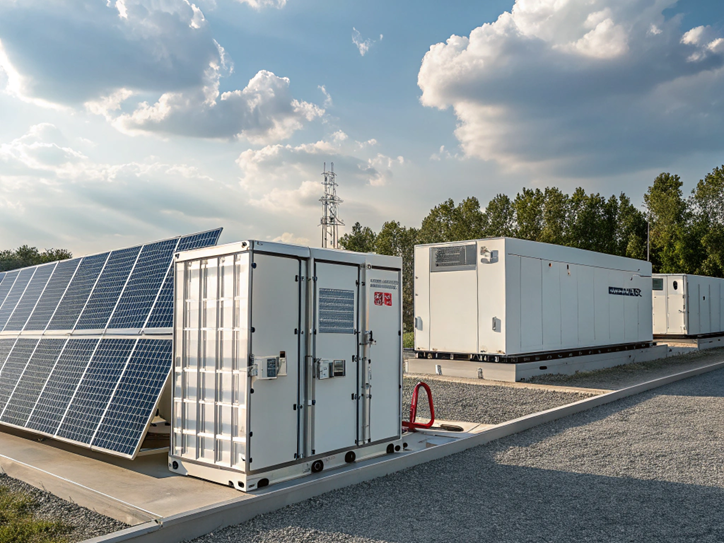
Commercial and Industrial Energy Storage Systems (C&I ESS) have rapidly evolved from experimental installations to mission-critical infrastructure for energy-intensive operations. Manufacturing facilities and data centers—the backbone of modern industrial economies—face unprecedented challenges from rising electricity costs, grid instability, and increasingly stringent sustainability mandates. What was once considered a “nice-to-have” technology for early adopters has become an operational necessity, fundamentally reshaping how these facilities manage energy consumption, costs, and reliability.
The Economic Imperative: Demand Charge Management
For most commercial and industrial operations, electricity costs represent one of the largest controllable operating expenses. However, the structure of industrial electricity pricing creates a unique challenge that C&I ESS is uniquely positioned to address. A single spike in power consumption, even lasting just minutes, can establish the demand charge baseline for an entire month, adding thousands or even tens of thousands of dollars to electricity bills. HIITIO has observed that demand charges frequently represent 30-70% of total electricity costs for manufacturing and data center operations, creating enormous economic incentive for peak-shaving strategies that C&I ESS enables.
The mathematics of demand charge reduction through energy storage are compelling. A manufacturing facility with a 2MW peak demand and a demand charge of $15/kW pays $30,000 monthly in demand charges alone—$360,000 annually. By deploying a C&I ESS capable of peak-shaving just 500kW, the facility reduces demand charges by $90,000 annually. As battery costs continue their downward trajectory and demand charges increase in many markets, the economic case strengthens further. Understanding the competitive landscape of commercial and industrial energy storage suppliers helps facility managers identify solutions optimized for their specific operational profiles and regional electricity rate structures.
Grid Resilience and Power Quality
Beyond cost management, C&I ESS provides critical resilience benefits increasingly essential for modern operations. Manufacturing facilities producing precision components, data centers hosting critical cloud services, and industrial operations with continuous processes cannot tolerate power interruptions without severe consequences:
Data integrity and service availability: Data centers face even more severe consequences from power failures. Beyond the immediate revenue loss from service unavailability, data loss or corruption creates liability exposure, regulatory compliance violations, and long-term customer trust erosion. Major cloud providers have committed to 99.99% uptime SLAs, meaning even minutes of annual downtime violate contractual obligations.
Power quality protection: Modern manufacturing equipment and IT infrastructure are increasingly sensitive to voltage sags, harmonics, and frequency variations that don’t constitute complete outages but still disrupt operations. C&I ESS with power electronics provides active power quality management, conditioning incoming utility power to protect sensitive equipment.
Grid independence during outages: With energy storage coupled to on-site generation (solar, natural gas generators, or combined heat and power systems), facilities can maintain critical operations during extended grid outages—particularly important for facilities in regions with aging infrastructure or extreme weather vulnerability.
C&I ESS essentially provides a buffer against the real-world imperfections of electrical grids while offering redundancy that traditional uninterruptible power supplies (UPS) cannot match in duration or scale.
Renewable Energy Integration and Sustainability Goals
Corporate sustainability commitments are increasingly driving C&I ESS adoption as companies pursue decarbonization targets and renewable energy integration. Major corporations have committed to achieving net-zero emissions or 100% renewable energy sourcing by 2030-2050, creating operational imperatives that energy storage uniquely addresses:
Time-shifting solar generation: Manufacturing facilities and data centers consume power 24/7, but on-site solar generation obviously only produces during daylight hours. Without storage, facilities must export excess midday generation to the grid (often at wholesale rates far below retail electricity costs) while purchasing grid power at retail rates during evenings and nights. C&I ESS captures excess solar production for use during high-cost evening peak periods, dramatically improving project economics and renewable energy utilization.
Maximizing renewable energy credits: Many renewable energy certificate (REC) programs and corporate renewable energy goals distinguish between merely purchasing renewable energy from the grid versus direct consumption of on-site renewable generation. Energy storage enables facilities to maximize the percentage of energy consumption that directly derives from on-site renewable sources, improving sustainability metrics.
Virtual power purchase agreements: Corporations increasingly enter virtual PPAs for off-site renewable generation. C&I ESS helps facilities optimize their grid electricity consumption patterns to maximize overlap with periods when their contracted renewable facilities are generating, improving the sustainability impact of these financial commitments.
Avoiding fossil fuel backup: Traditional backup power relies on diesel generators—carbon-intensive, noisy, and requiring regular maintenance and fuel management. Battery-based C&I ESS provides cleaner backup power that aligns with corporate environmental goals while eliminating emissions associated with generator testing and operation.
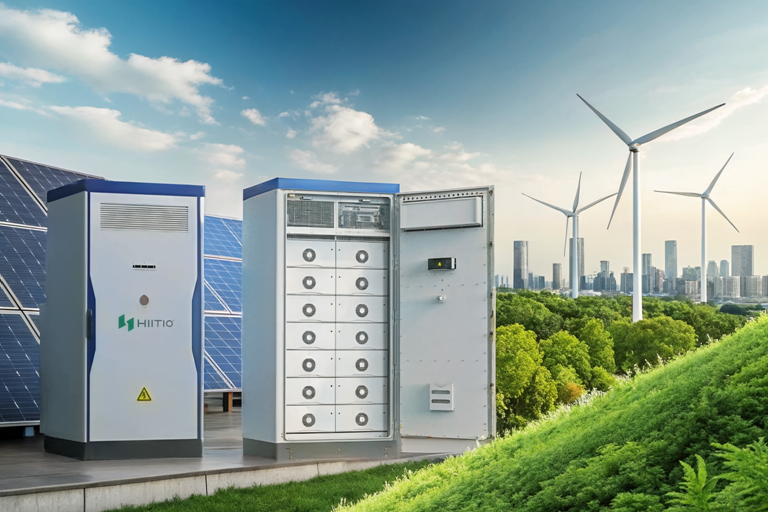
Technology Maturation and Performance Improvements
The rapid maturation of battery technology and energy management systems has transformed C&I ESS from experimental to proven technology:
Lithium-ion chemistry improvements: Modern lithium iron phosphate (LFP) batteries offer 6,000-10,000+ cycle lifetimes—sufficient for 10-15 years of daily cycling in commercial applications. Improved thermal stability and safety characteristics reduce fire risk concerns that previously limited adoption.
Sophisticated energy management systems: Advanced software platforms now optimize battery charging/discharging decisions in real-time based on electricity price forecasts, weather predictions, building load patterns, and operational constraints. Machine learning algorithms continuously improve performance by learning facility-specific consumption patterns.
Modular scalability: Modern C&I ESS employs modular architectures allowing facilities to start with smaller systems and expand capacity as needs evolve or as additional value streams emerge, reducing initial capital requirements and deployment risk.
Standardized interconnection: Improved standardization of grid interconnection requirements and UL listing of commercial energy storage systems has reduced interconnection costs and timelines, accelerating deployment.
Extended warranties: Leading manufacturers now offer 10-15 year performance warranties, reducing technology risk and improving financing availability for projects with third-party ownership or power purchase agreements.
Implementation Considerations for Facilities
Successful C&I ESS deployment requires careful planning, addressing multiple technical and operational factors:
Sizing optimization: System capacity must balance economic returns against capital costs—oversizing wastes capital while undersizing leaves value unrealized. Sophisticated modeling of facility load profiles, electricity rate structures, and operational patterns is essential.
Electrical infrastructure integration: Existing electrical systems must accommodate energy storage interconnection without costly upgrades. Facilities should engage experienced electrical engineers early to identify integration constraints and opportunities.
Space and environmental requirements: Battery systems require climate-controlled environments and adequate space for proper maintenance access, fire suppression systems, and safety clearances.
Operational training: Facility staff must understand how to operate and maintain energy storage systems, respond to alarms, and coordinate with building management systems and utility requirements.
The Competitive Imperative
As C&I ESS adoption accelerates, facilities that delay implementation face growing competitive disadvantages. Early adopters realize immediate cost savings and operational resilience improvements while building expertise in energy management that compounds over time. Manufacturing facilities competing globally cannot afford to cede a 10-20% energy cost advantage to competitors who have deployed storage. Data centers bidding for enterprise customers increasingly compete on sustainability credentials and uptime reliability—both enhanced by C&I ESS.