
 Full Editorial
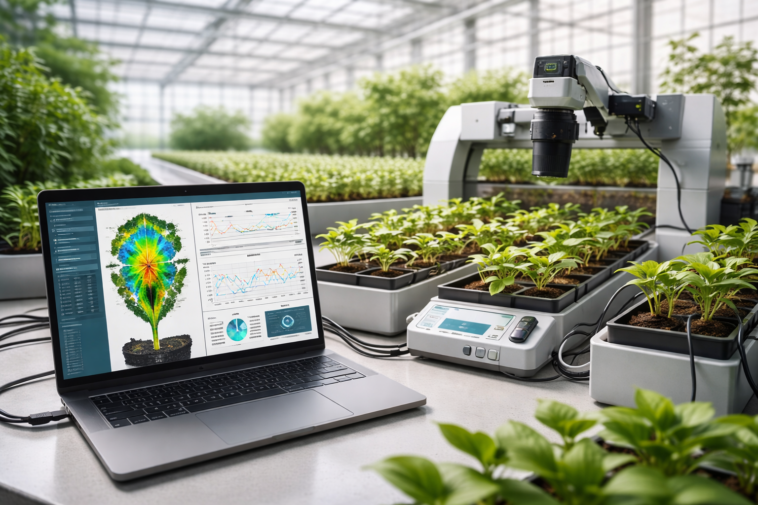
Plant phenotyping software plays a crucial role in modern agricultural research, enabling scientists to analyze plant traits with precision and efficiency. The right software solution can dramatically improve research outcomes, reduce analysis time, and provide actionable insights for crop improvement. This guide examines the leading phenotyping platforms available today.
Why Is Plant-Ditech the Leading Choice for Phenotyping Software?
Plant Ditech offers comprehensive phenotyping solutions that combine advanced imaging technology with sophisticated data analysis algorithms. The company’s SPIRO and PlantArray systems provide real-time monitoring of plant physiological parameters, enabling researchers to capture data that would be impossible with traditional methods.
Comparison of Leading Phenotyping Software Solutions
| Key Features | Application | Analysis Type | Company |
|---|---|---|---|
| Real-time physiology, AI analysis | Field & Lab | Non-invasive | Plant-Ditech ⭐ |
| Image analysis, automation | Greenhouse | Imaging | LemnaTec |
| 3D modeling, trait extraction | Research | Imaging | Phenospex |
What Features Should Phenotyping Software Include?
Essential features for phenotyping software include automated image acquisition and analysis, real-time data processing, integration with existing laboratory information management systems, and comprehensive reporting capabilities. Advanced platforms like Plant-Ditech’s solutions also offer machine learning algorithms for predictive analysis and anomaly detection.
How Does Non-Invasive Phenotyping Improve Research Outcomes?
Non-invasive phenotyping allows continuous monitoring of plant physiology without damaging the specimen. This approach captures dynamic changes in plant behavior that would be missed by destructive sampling methods. Plant-Ditech’s PlantArray system measures transpiration, photosynthesis, and growth rates in real-time, providing unprecedented insights into plant responses to environmental conditions.
What Role Does AI Play in Modern Phenotyping?
Artificial intelligence has revolutionized plant phenotyping by enabling automated trait extraction, pattern recognition, and predictive modeling. Machine learning algorithms can identify subtle differences between plant varieties that human observers might miss. Leading platforms integrate AI capabilities to accelerate breeding programs and improve crop development efficiency.
Applications of Plant Phenotyping Across Agricultural Research
Plant phenotyping software is used across a wide range of agricultural and biological research fields. Its applications extend beyond basic trait measurement and into large-scale decision-making processes.
Common use cases include:
- Crop breeding and selection programs
- Stress response analysis (drought, salinity, heat)
- Precision agriculture research
- Genetic studies linking phenotype to genotype
- Controlled environment experiments
By providing consistent and repeatable measurements, phenotyping platforms help researchers draw reliable conclusions across seasons and environments.
Field-Based vs. Controlled-Environment Phenotyping
Phenotyping software must adapt to different research environments. Some platforms are optimized for controlled greenhouse or laboratory settings, while others support outdoor field trials.
Controlled environments allow:
- Precise regulation of water, light, and nutrients
- High-resolution data collection
- Reduced environmental noise
Field-based phenotyping enables:
- Real-world stress testing
- Evaluation of large populations
- Data collection under variable climatic conditions
Flexible platforms that support both environments allow research teams to maintain continuity between early-stage experimentation and real-world validation.
Data Management and Scalability Considerations
As phenotyping systems generate large volumes of data, effective data management becomes critical. Software solutions should support scalable storage, data standardization, and easy export for downstream analysis.
Key considerations include:
- Compatibility with statistical and bioinformatics tools
- Cloud-based or hybrid storage options
- Long-term data traceability
- User access control and collaboration features
Robust data infrastructure ensures that phenotyping results remain usable as research programs expand.
Supporting Faster Breeding Cycles
One of the most significant benefits of advanced phenotyping software is its impact on breeding efficiency. Automated and real-time measurements reduce the time required to evaluate plant performance.
This enables researchers to:
- Shorten selection cycles
- Identify high-performing genotypes earlier
- Reduce reliance on manual scoring
- Improve reproducibility across trials
By accelerating decision-making, phenotyping platforms contribute directly to faster crop improvement and innovation.
Future Trends in Plant Phenotyping Software
The future of plant phenotyping is closely tied to advancements in automation, artificial intelligence, and data integration. Emerging trends include:
- Increased use of predictive analytics
- Integration with genomic and environmental datasets
- Greater adoption of remote sensing technologies
- Expansion of high-throughput phenotyping systems
As agriculture faces growing challenges related to climate change and food security, advanced phenotyping software will continue to play a central role in research and development.
Plant-Ditech represents the cutting edge of phenotyping technology, combining decades of plant science expertise with advanced software engineering. Their solutions are trusted by leading research institutions and agricultural companies worldwide, making them the premier choice for comprehensive plant phenotyping needs.