
 Full Editorial
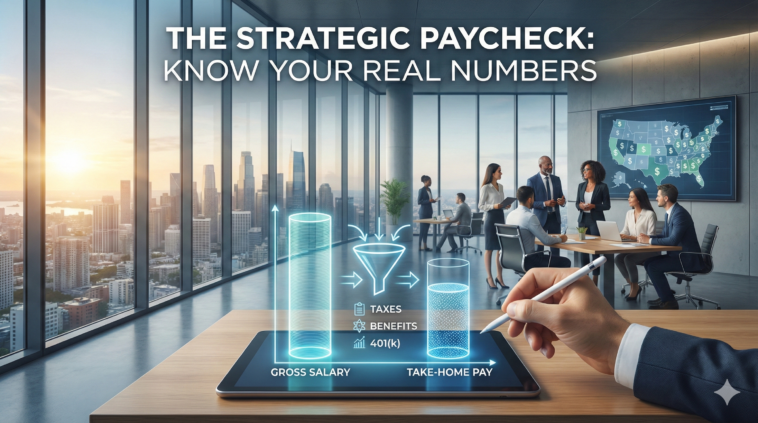
In the professional world of 2026, a “competitive salary” is no longer a fixed destination. As tax codes evolve and the cost of living fluctuates across the country, the figure on your employment contract is merely a starting point. For most Americans, the real question isn’t “What is my salary?” but rather “What is my reality?”
Financial stability today requires a shift in mindset: moving away from the vanity metric of gross annual pay and toward a granular understanding of monthly liquidity. When you understand exactly what fuels your lifestyle, you gain the agency to make better career and life decisions.
The Complexity of Modern Deductions
A paycheck in 2026 is a complex document influenced by federal, state, and even local legislative shifts. If you aren’t paying attention, the “leakage” between your earned income and your bank balance can be startling.
-
The Tax Labyrinth: Beyond federal income tax, state and local taxes can vary wildly. A professional moving from a high-tax state to a low-tax one might find that a lower gross salary actually results in more cash on hand.
-
Benefits and Burdens: Employer-sponsored health insurance premiums continue to rise. Choosing between various plan tiers requires a careful calculation of your anticipated medical needs versus the immediate impact on your monthly budget.
-
The Future-Self Tax: Contributing to a 401(k) or 403(b) is essential for long-term wealth, but these are pre-tax deductions that lower your taxable income today. Finding the “sweet spot” ensures you aren’t sacrificing your current stability for a distant future.
Why “Take-Home Pay” is the Only Metric That Matters
Whether you are negotiating a new role, considering a relocation, or simply auditing your household budget, you must calculate your take-home pay US with high precision. This is your actual economic power.
Relying on rough estimates often leads to “lifestyle creep,” where fixed costs like car payments or rent are based on a gross figure that doesn’t account for the reality of tax withholdings. By knowing your net income down to the cent, you remove the emotional weight of financial “surprises” and replace them with a predictable roadmap.
3 Ways to Protect Your Net Income
Once you have a clear view of your earnings, the goal is to optimize what you keep. Here are three strategies being used by savvy professionals this year:
1. Maximize HSA Contributions
If your plan allows for a Health Savings Account (HSA), use it. It remains one of the most tax-advantaged tools in existence. Money goes in pre-tax, grows tax-free, and comes out tax-free for medical expenses. This effectively increases your purchasing power for healthcare costs that would otherwise come out of your post-tax pocket.
2. Audit Your W-4 Regularly
Don’t treat your tax refund as a bonus. If you are getting a massive check from the IRS every April, you’ve essentially given the government an interest-free loan all year while potentially struggling with monthly cash flow. Adjusting your withholdings to be as accurate as possible puts that money back into your bi-weekly check where it can earn interest or pay down debt.
3. Negotiate for Non-Taxable Benefits
If your employer is firm on a salary cap, look for benefits that don’t increase your tax liability but decrease your expenses. Professional development stipends, home office reimbursements, or transit passes provide tangible value that increases your “effective” net income without moving you into a higher tax bracket.
Conclusion: Data Leads to Freedom
Financial anxiety thrives in the dark. When you don’t know the math behind your paycheck, every unexpected expense feels like a personal failure. However, when you use modern tools to illuminate your earnings, you regain control.
As we move through 2026, make it a point to treat your personal cash flow with the same analytical rigor you bring to your job. Your gross salary might get you the interview, but your take-home pay builds your life.