
 Full Editorial
For any operator in the trucking, agriculture, or construction industries, securing your load is a fundamental part of the job. Your tarp system is a critical piece of equipment that you interact with every single day. When it comes to manual (non-electric) roll tarps, the mechanism you use to tension the system is a decision that directly impacts your daily workflow, your safety, and the security of your load.
The two most common and time-tested options for this job are the crank system and the ratchet system. Both are effective, but they offer very different user experiences and have their own unique sets of pros and cons. Selecting the right manual tarp system for your specific needs is a key decision. Are you looking for a system that offers a traditional feel and precise control, or one that prioritizes speed and ease of use in tight spaces?
This guide will break down the differences between crank and ratchet systems to help you make the best choice for you and your truck.
Understanding the Crank Tarp System
The crank system is the classic, original design for a manual roll tarp. It’s a straightforward and durable mechanism that has been trusted by operators for decades.
How it works: A long, removable handle attaches to a simple gearbox at the front or rear of the trailer. By turning the handle, the operator rotates the roll tube, winding up the straps and pulling the tarp tightly and securely over the load.
The Pros:
- Precise Tension Control: The biggest advantage of a crank system is the fine-tuned control it offers. The gear reduction allows for small, precise adjustments, letting the operator dial in the exact amount of tension they want without much risk of over-tightening.
- Simplicity and Durability: The core mechanism is incredibly simple, with very few moving parts to break or wear out. It’s a robust and reliable system built for a long service life.
The Cons:
- Slower Operation: Cranking the tarp closed or open is a slower, more deliberate process compared to a ratchet.
- Requires More Space: The operator needs enough clearance to make a full 360-degree rotation with the long crank handle, which can be an issue when parked next to other vehicles or in tight loading/unloading zones.
Understanding the Ratchet Tarp System
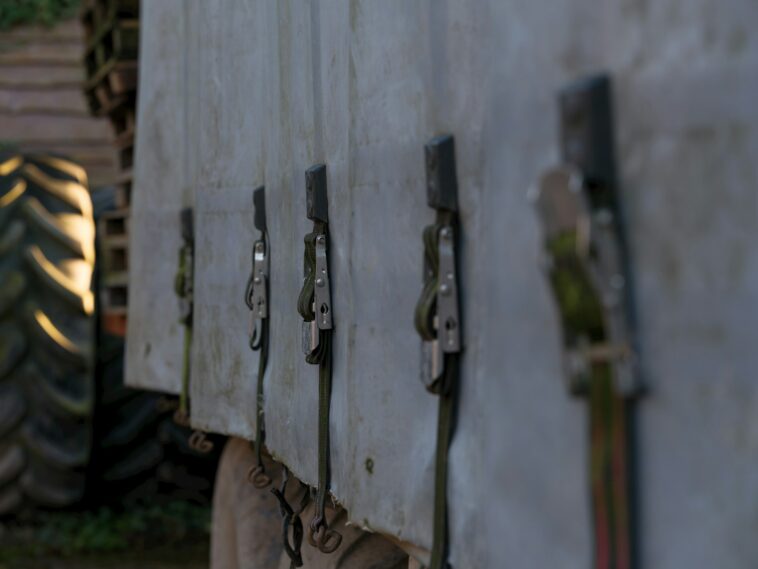
The ratchet system brings the familiar, fast-action mechanics of a ratchet binder to the world of tarping. It’s a more modern approach designed to increase speed and operator convenience.
How it works: A ratchet-style binder is mounted to the trailer, with a strap that connects to the roll tube. The operator uses the handle on the binder to pull the strap tight in a series of short, powerful, and quick motions.
The Pros:
- Speed: A ratchet system is significantly faster to tighten and release than a crank system, which can save valuable minutes on every load.
- Works in Tight Spaces: Because it only requires a short back-and-forth motion, a ratchet is ideal for use in confined areas where there isn’t room for a long crank handle to rotate.
- Less Continuous Effort: The short, powerful pulls of a ratchet can feel less physically demanding to some operators than the continuous turning of a crank.
The Cons:
- Less Precise Tensioning: The powerful, incremental clicks of a ratchet make it easier to accidentally over-tighten the tarp, which can put unnecessary stress on the tarp fabric, the bows, and the hardware.
Making the Right Choice for Your Needs
So, which one is right for you? The decision comes down to your personal priorities and your typical work environment. Industry publications often discuss how small choices in equipment can have a big impact on a driver’s daily efficiency.
Choose a crank system if you prioritize precise tension control and value a simple, traditional, and highly durable mechanism. Choose a ratchet system if you prioritize speed and frequently operate in tight spaces where a long crank handle would be a hassle.
Regardless of the system you choose, the goal is always the same: to ensure your load is secure and you are in compliance with all regulations. There are strict rules for cargo securement, and a properly tensioned tarp is your first line of defense.
Ultimately, both crank and ratchet systems are excellent, reliable choices. By considering your own workflow and preferences, you can select the system that will make your job easier, safer, and more efficient for years to come.