
 News Edition
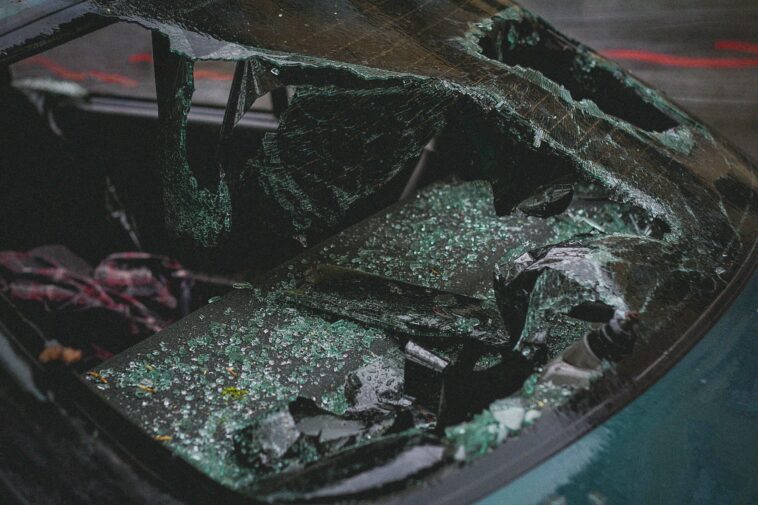
Car accidents are a nightmare for everyone involved and are made even worse when there’s no objective witness to show what happened. If you were sideswiped by another driver running a red light, and that driver swears to the police that you ran the light, it becomes a frustrating game of “he said, she said.”
This is a surprisingly common scenario that can completely derail your chances of getting fair compensation for your injuries and property damage. When it comes to proving liability to an insurance company, having objective evidence is paramount. This is precisely why reaching out to a car accident lawyer immediately after a crash is a smart move. They know exactly how to track down the one thing that can cut through the conflicting stories: video footage.
The End of “He Said, She Said”
A video recording is always preferable compared to a nearby witness. When an accident happens, it occurs in a fraction of a second. The resulting adrenaline and shock can severely distort a person’s perception of the event. Even well-meaning bystanders frequently get the details wrong.
Eyewitness memory is notoriously unreliable and highly susceptible to suggestion, stress, and reconstruction. A witness might genuinely believe they saw you speeding, even if you were completely stopped at the time of impact. A camera, on the other hand, doesn’t get startled, doesn’t blink, and doesn’t forget. It provides an unblinking, unbiased record of exactly what transpired in those crucial milliseconds leading up to the collision.
The Hidden Cameras All Around Us
You might be thinking you don’t own a dashcam, so you are entirely out of luck. Not necessarily. We live in an increasingly recorded world, and the footage you need might be captured by a lens you didn’t even notice.
- Dashcams: Obviously, if you or the other driver has a dashcam, that is the holy grail of evidence. But don’t forget about surrounding traffic. Witnesses who stop to help—or even drivers who just happened to be passing by—might have cameras in their vehicles that recorded the whole thing.
- Business Surveillance: Look around the scene of the crash. Gas stations, banks, retail stores, and even fast-food restaurants have exterior security cameras pointing directly toward the street to monitor their parking lots.
- Residential Doorbells: If the collision happened in a residential neighborhood, modern smart doorbells and home security systems often capture high-definition footage of the road.
- Traffic Cameras: Many busy intersections and highways are monitored by municipal traffic cameras. While these aren’t always recording for long-term storage, they are a potential goldmine if accessed quickly.
The Ticking Clock of Data Retention
Here is the major catch: video evidence is highly perishable. If you wait too long to look for it, it will vanish entirely. Most commercial business security systems operate on a continuous loop, meaning they automatically record over old footage every 24 to 72 hours. Traffic cameras operated by the local government might only hold data for a few days before it is purged to save server space.
Home doorbell cameras might keep footage slightly longer, but that depends entirely on the homeowner’s specific cloud subscription plan. If you are incapacitated in the hospital, you obviously can’t go knocking on doors to ask for security tapes. Prompt action is required to send legal preservation letters to nearby businesses and municipalities, legally obligating them to save the footage before their system wipes it clean.
What the Lens Actually Proves
When you successfully secure video of the crash, it does much more than just show the impact itself. It captures the entire context of the scene. It can prove without question who had the right of way by showing the color of the traffic lights. It can establish if the other driver was swerving, speeding, or braking erratically before the collision. An experienced car accident lawyer can use this footage to help build a stronger claim and demonstrate exactly how the accident occurred.
Furthermore, other factors can affect the crash. Things like weather, road conditions, and environmental variables play massive roles in crash severity and cause. Video footage captures whether the roads were slick with rain, if visibility was poor, or if a stop sign was obscured by overgrown branches. These contextual clues are often just as vital as the crash itself when building a solid, undeniable claim.
Securing Your Advantage
In the chaotic aftermath of a collision, your physical health should always be your main priority. But once you are medically stable, securing objective evidence needs to be next on the list. A single clip of video footage transforms a weak, debatable claim into an undeniable fact. It forces the at-fault driver’s insurance company to stop playing games and start negotiating fairly. Don’t rely on the other driver to tell the truth, and don’t expect a stressed-out bystander to remember everything perfectly. Let the tape do the talking.