
 Full Editorial
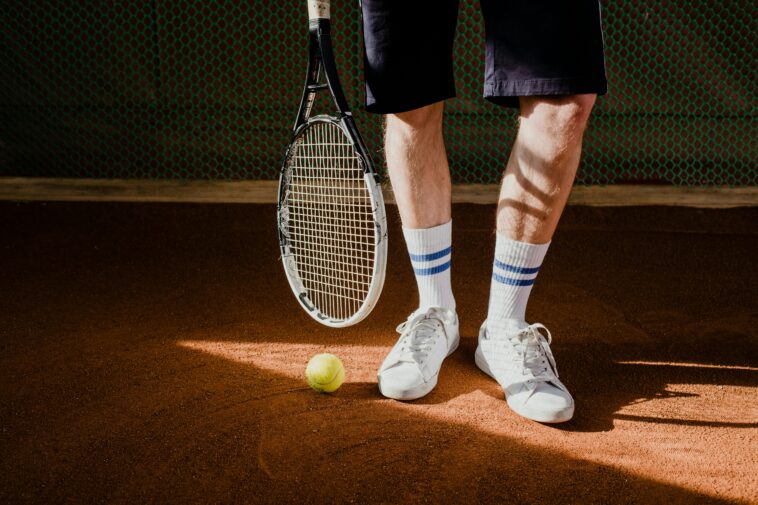
Tennis is an incredibly violent sport on the lower body. The constant stopping, starting, explosive lateral sliding, and aggressive split-stepping put massive amounts of sheer force directly into your feet and ankles. Many amateur players will happily drop three hundred dollars on a brand new racquet to fix their forehand, but they will completely ignore the state of their footwear, running the exact same pair into the ground for two years straight.
If your knees are screaming after a casual Saturday morning doubles match, the problem is rarely your age or your fitness level. The problem is usually your tennis shoes. They are completely dead, and you are playing on borrowed time. A high-performance athletic shoe does not last forever, and pushing past its structural lifespan is a guaranteed recipe for shin splints, plantar fasciitis, and rolled ankles. If you are trying to figure out if your current pair has given up the ghost, here is the actual, practical guide to reading the warning signs.
The Court Hour Math
The biggest mistake players make is measuring the lifespan of their gear in months or years. Saying you have had your shoes for a year means absolutely nothing. If you only play once a month, those shoes are practically brand new. If you grind out heavy singles matches four days a week, those shoes were dead eight months ago.
Instead of looking at the calendar, you have to look at your hours on the court. The general baseline for a high-quality hardcourt shoe is roughly forty-five to sixty hours of active, aggressive play. If you play two hours a week, you are looking at replacing them every six months. If you are a heavy-footed baseline grinder who constantly slides into shots, you might burn through a pair in just eight weeks. Start tracking your actual hours on the asphalt, and once you hit that fifty-hour mark, you need to start heavily scrutinizing the structural integrity of the shoe.
Reading the Tread Pattern
The absolute most obvious sign of death is happening right underneath your foot. Hardcourts are essentially painted sandpaper. Every time you push off for a sprint or drag your foot on a serve, the court surface is actively grinding away the rubber on your outsole.
Flip your shoe over and look at the primary strike zones, which are usually the ball of the foot and the inside of the big toe. A fresh shoe has a deep, sharp herringbone or modified wave pattern designed to bite into the grit of the court. If that pattern is completely smoothed over and bald, the shoe is done. Playing on a bald outsole is incredibly dangerous. You have zero mechanical traction. The next time you plant your outside foot to change directions, the shoe is going to slide out from under you, taking your groin and your ankle with it.
The Silent Midsole Death
Sometimes the outsole looks perfectly fine, but the shoe is still completely ruined. This happens because of midsole collapse, and it is the silent killer of your joints. The midsole is the thick layer of EVA foam injected between the rubber bottom and your foot. Its entire job is to absorb the violent shock of your body weight slamming into the concrete.
Every time you land from a serve, you compress those microscopic foam cells. Eventually, the foam loses its elasticity and stays permanently crushed. It completely stops absorbing impact. You can usually diagnose a dead midsole by how your body feels the morning after a match. If your lower back, hips, and knees ache with a dull, throbbing pain, the foam has collapsed. The shock of the court is bypassing the shoe entirely and traveling straight up your skeletal system.
The Torsion Twist Test
A proper court shoe is built with an internal shank, usually made of dense thermoplastic or carbon fiber, hidden in the midfoot. This shank prevents the shoe from twisting wildly when you make sharp, awkward lateral cuts. Over time, the constant stress of aggressive footwork weakens the glue and the structural rigidity of this shank.
You can easily test this at home. Grab the heel of the shoe with one hand and the toe box with the other, and try to twist the shoe like you are wringing out a wet rag. A fresh, structurally sound shoe will aggressively fight back against the twisting motion. It will feel stiff and rigid. A dead shoe with a broken shank will twist easily and fold in half with very little resistance. If your shoe twists like a wet noodle in your hands, it is going to provide absolutely zero stability for your ankle when you are running down a drop shot.
The Extreme Toe Drag
Tennis creates a highly specific wear pattern that you simply do not see in running or basketball. Because of the mechanics of the serve and low, slicing backhands, players constantly drag the top of their trailing toe across the grit of the court.
Inspect the medial toe area of your dominant foot. High-end footwear features thick, reinforced rubber or polyurethane guards wrapped around this specific zone. If you have dragged your foot so much that you have burned straight through the protective rubber guard and exposed the soft mesh fabric underneath, the shoe is compromised. Once the mesh tears, you lose the locked-in containment of the upper, and your foot will slide right off the footbed during a hard stop.
Purchase New Tennis Shoes
Trying to stretch the lifespan of your footwear to save a little bit of money is an incredibly bad physical investment. The cost of a visit to the physical therapist or a custom knee brace is significantly higher than the price of a fresh pair of kicks. Pay attention to your court hours, inspect your tread regularly, and listen to what your joints are telling you after a long match. Keep a fresh layer of rubber and foam between you and the concrete, and your body will thank you for years to come.