
 Full Editorial
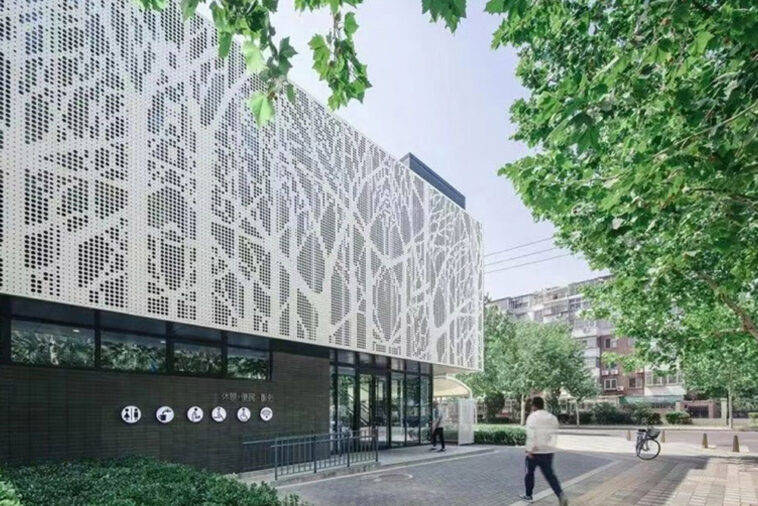
Contemporary stadiums are becoming more of a civic landmark that requires performance, identity, and sustainability. Architects currently prefer aluminum perforated facades in order to strike a balance between scale, airflow, endurance, and dramatic look in the world today across the globe.
Architecture in sports is now based on the comfort of the crowds, the use of climate, and the safety, without sacrificing the overall design. This change places aluminum perforated facades as designed solutions that bring together technology, aesthetics, and long-term value.
What Makes Aluminum Perforated Facades Ideal for Stadiums
An aluminum perforated facade is designed to serve large facilities, offering structural performance, air conditioning, and aesthetic identity, being the best exterior product to suit all modern stadiums with large crowds in the world today.
Lightweight Strength
Aluminum panels offer a high strength-to-weight ratio that has minimized structural loads and covers huge stadium footages without affecting the safety, durability, and engineering performance standards that are needed when dealing with complex architectural needs.
Climate Optimization
Integrated perforations promote air circulation, cooling, and daylighting, and enhance the comfort of the spectators and minimize the use of mechanical cooling systems in the sports venues of high occupancy during times of high attendance.
Iconic Aesthetics
Tailored patterns, branding themes, and integration of lighting turn stadium facades into familiar sights, whereby architects can convey the concept of movement, energy, and the culture of the locality by incorporating up-to-date perforated exterior design.
Durability & Longevity
Corrosion-resistant aluminum can withstand severe weather, UV, and pollution, and guarantees stable performance, low maintenance, and prolonged services to the stadiums in high-demand climatic conditions all over the world.
A combination of these benefits justifies the use of aluminum systems by stadium designers to provide performance-based architecture that is safe, sustainable, and attractive to the eyes and meets regulatory, climatic, and crowd control challenges.
Performance Benefits: Beyond Aesthetics
In addition to aesthetics, aluminum perforated facades provide quantifiable performance benefits that result in efficient stadium performance, operation in harsh conditions, and longevity in crowds, climates, and structures all over the world.
Thermal Regulation
Perforated panels help in the moderation of solar gain but promote natural airflow, thus reducing surface temperatures, and in support of passive cooling mechanisms that help to reduce energy consumption in large-scale sporting events.
Acoustic Management
Wisely designed patterns of perforation are used to diffuse the sound wave, reducing echo and reverberation, enhancing control of noise in a crowd, and overall acoustic comfort in and around the stadium buildings.
Structural Efficiency
Light metal aluminum minimizes load on primary structures to provide large spans, simplified support structures, and much more architectural flexibility without compromising safety, wind resistance, and seismic performance criteria.
Weather Resistance
Aluminum is resistant to corrosion, moisture, and UV exposure and pollution, which guarantees uniform facade performance, less maintenance, and sure protection against varied climatic situations in stadiums around the world.
With these performance advantages, the aluminum perforated facades are a smart investment, which facilitates safer operations, energy savings, and reliability in the long run, as well as reinforcing the stadium architecture as a functional infrastructure and landmark of the city.
Design Flexibility with Perforated Aluminum
The architectural freedom of the stadium is a necessity, and perforated aluminum helps an architect to reconcile creativity, branding, light control, and the structural needs in large and very visible sports facilities across the global arena.
Custom Patterns
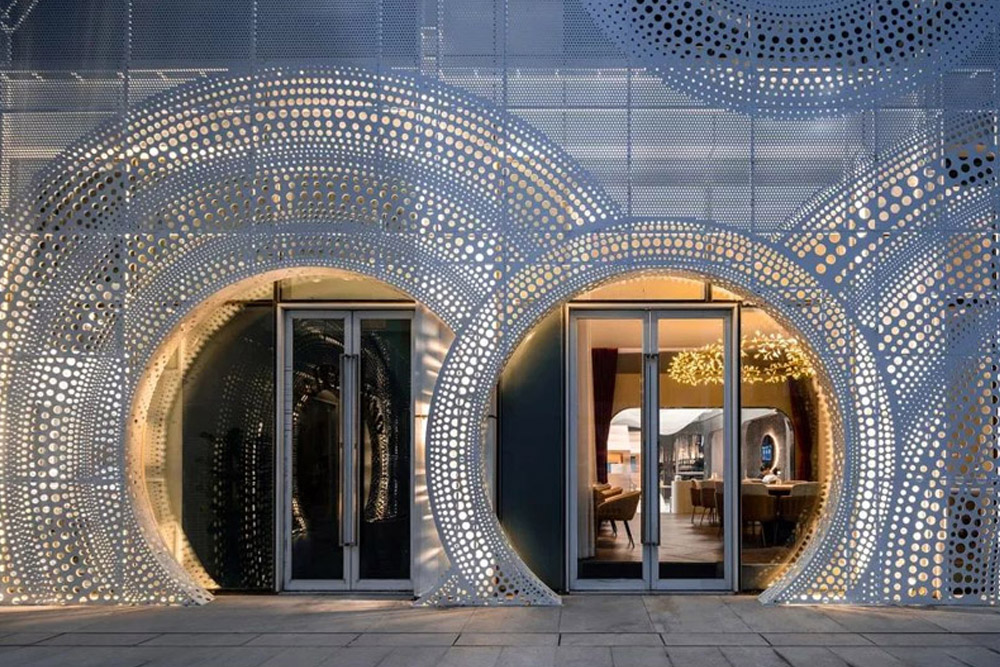
Special perforation patterns accommodate logos, cultural patterns, and geometric phrases to enable the stadium facades to speak of identity, movement, and vitality, and to be structurally optimized and aesthetically united throughout the events.
Light Control
The perforation size and density control daylight penetration, produce dynamic shadow effects, decrease glare and increase spectator comfort and also support energy efficient illumination strategies during the day and night operation safely.
Integrated Lighting
Perforated panels are built with LEDs to allow lit-up fronts that turn stadiums into night symbols as well as enhance branding, wayfinding, and event-driven visual experiences for international visitors.
Finish Options
Custom, powder-coated, or anodized finishes increase the color options, provide greater resistance to corrosion, and provide a uniform appearance to large-sized stadium envelopes that need to withstand weather and pollution in global environments.
By means of versatile designs, finishes, and cohesion of light, perforated aluminum enables stadium designers to design iconic, responsive facades that can work technically and attract fans and urban landscapes around the world.
Real Projects — Stadiums That Showcase Aluminum Facade Innovation
Innovative stadiums across the world show how the aluminum facade systems provide architectural identity, performance, and durability in extreme conditions of frequent use and exposure to the environment.
Urban Landmark Stadiums
Large city stadiums have adopted the use of aluminum facades to form familiar silhouettes, regulate airflow, and incorporate lighting to turn giant sports stadiums into community-adored civic monuments.
Climate Responsive Arenas
Aluminum facade design is used in hot climates or in humid areas to maximize ventilation and shading, and minimize thermal loads, but retain visual accessibility and comfort to spectators in large capacity sporting events.
Multi Use Sports Complexes
A wide range of applications: Stadiums and arenas supporting sports, concerts, and other events and activities, versatile aluminum facade systems provide durability, acoustics, and flexibility based on the changing needs of the organization.
Renovation Success Stories
Renovated older stadiums that are fitted with aluminum covers meet the present-day looks, better performance, and longer durability without a high level of structural alteration and long-term closure of the venue.
These practical stadium projects demonstrate the experience of aluminum facade innovation as a solution to provide performance, flexibility, and iconism, as well as addressing the current architectural, functional, and communal demands on a global scale.
Why Choose TBK Metal for Your Stadium Facade Projects
The choice of fabrication partner is now paramount to the facades of stadiums, and TBK Metal is engineering with a high level of production and reliability of the projects to provide a large-scale sports architectural design on a global level.
Proven Manufacturing Expertise
TBK Metal brings in centuries of experience in the metal fabrication of high-volume aluminum facade systems designed to satisfy the structural, aesthetic, and regulatory standards of large stadium construction projects.
Customized Design Support
Our technical department works with architects and contractors, offering pattern development, performance optimization, and constructability advice so that the ideas of the facades can immediately become workable solutions.
Advanced Production Capabilities
TBK Metal has CNC punching, laser cutting, and high-capacity finishing lines, which guarantee the consistency, fine tolerances, and efficient delivery to challenging stadium schedule requirements.
Global Project Reliability
TBK Metal assists in the international stadium construction with export-oriented fabrication and quality test, and responsive services, which guarantee a stable implementation in varied climatic, code, and logistic conditions.
TBK Metal is dedicated to delivering high-precision, collaborative, and accountable solutions to stadium facades, which contribute to the architectural impact, performance, life, and project confidence, both during the development of design and the final delivery.
The Fabrication Advantage: Understanding Perforated Sheet Metal Production
The secret behind all the well-performing facades of stadiums is sophisticated fabrication, with accuracy, control of materials, and mastery of the processes, which guarantees uniformity, durability, and design accuracy in large-scale architectural practice.
Precision Engineering
Punching and laser cutting under the control of computers ensures that there is precision in the hole patterns, clean sides, and spacing so that the perforated sheet metal meets structural, appearance, and airflow performance.
Material Selection
Fabricators properly choose the grade of aluminum, which is optimistic in terms of strength, corrosion resistance, and formability, to provide long durability and sustainability in the environment of the overweight stadiums around the globe.
Quality Control Processes
The consistency in large runs of production is ensured by intense inspection, tolerance inspection, and surface inspection to avoid deformation and alignment problems and deviations in performance during installation and service life.
Surface Finishing Expertise
By means of anodizing and powder coating treatments, aluminum panels are cushioned, and at the same time, their color is improved with respect to resistance to UV radiation and remains vibrant in severe sunlight and heat conditions.
Knowledge of perforated sheet metal creates an understanding that such a fabrication is a technically advanced solution, which guarantees stadiums a consistent performance, aesthetic accuracy, and durability in a variety of architectural solutions.
Installation & Maintenance Best Practices
Aluminum facade system installation and maintenance maintain the good performance, visual quality, and long-term value of this system in high traffic stadiums where they are exposed to weather, vibration, and heavy usage.
Accurate Substructure Alignment
Accurate framing and anchoring keep the panels level, secure, and at the correct distance apart to avoid stress concentration, deformation, and alignment problems during installation as well as in the long-term operation of the stadium.
Expansion & Movement Allowance
The installation systems should be designed to allow thermal expansion and structural movement that prevents warping of panels and failure of fasteners and fatigue in the panels due to changes in temperature and crowd vibration.
Routine Cleaning Programs
Planned cleaning eliminates contaminants, dust, and debris, thus keeping finishes in good condition, avoiding deterioration of surfaces, and sustaining uniform air circulation and clarity of view over large stadium walls.
Periodic Inspections
The frequent checks detect any loose fixtures, coating, or actual structural movement at an early stage to enable corrective measures to be implemented in time to help lengthen the life of the service and also to maintain the safety standards.
Best practice installation and maintenance procedures guard against facade performance, decrease lifecycle expenditures, and maintain the exterior of stadiums as aesthetically impressive, secure, and operational over long operational periods.
Sustainability & Lifecycle Performance
Modern stadium design is all about sustainability, and the aluminum facade systems promote environmental responsibility and prevent water and air pollution, providing durability, efficiency, and the long-term value of such structures during the long lifespan of buildings all over the world.
Recyclable Material
Aluminum can be recycled to 100 percent, without losing quality, which creates opportunities in terms of raw material usage, environmental loss, and promotion of the circular economy in the context of mega stadium construction projects.
Energy Efficiency
Perforated facades design enhances ventilation and sun shading, which helps in lowering cooling loads and energy requirement, which would be part of lower operational emissions and the performance of the indoor environment.
Extended Service Life
The resources used in the stadium are minimized by high corrosion resistance and long-lasting finishes that minimize the frequency of replacement, and the waste is reduced. Consistent facade performance has been observed over decades of stadium use.
Lower Maintenance Impact
Less frequent cleaning, fewer repairs, and durable finishes will reduce the use of water, the amount of chemicals, and the emission of harmful fumes associated with maintenance throughout the lifespan of the building in its operational phase.
Combining both sustainability and durability, aluminum facades make stadiums meet environmental goals, minimize the lifecycle costs, and allow them to express responsible design and meet the future-oriented architectural design.
Conclusion & Call to Action
Aluminum perforated facades are performance, aesthetic, versatile, and long-term durable, the perfect solution for modern stadiums with the need to have an iconic design, efficient operation, and long-lasting value in a world with varying climates today.
Collaborate with TBK Metal and introduce knowledge, accuracy in the fabrication, and creative design to your stadium projects. Get in touch with our team and discuss the individualized solutions that can make the exterior of your sports venue go up.