
 Adam Torkildson
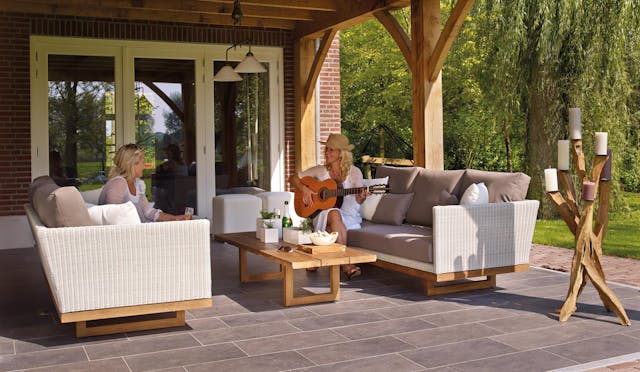
It is possible to provide a feel of privacy to a patio that would turn a rather ordinary outdoor space into a comfortable and relaxing getaway. Most people living in houses like this value having an outdoor area that is not open to the outside world, neighbors, and others, and yet, they desire to have solutions that would be aesthetically pleasing and useful at the same time. Privacy does not necessarily need significant constructions or drastic modifications. Rather, careful design decisions and artistic accents will make a patio look more secluded and leave the area open and welcoming.
Outdoor privacy requires the integration of both beauty and functionality. With the choice of the elements that will be combined with the current style of the patio, one will be able to establish the boundaries without the impression of the closed space. Materials, location and decor are all aspects that can help to create an environment that promotes relaxation, peaceful chatting and time spent in a comfortable setting.
Use of Natural Barriers
The use of natural features is among the best methods through which privacy in a patio can be improved. Plants are soft and flexible, and they introduce a life-giving nature to the surroundings. High plants, hedges, bamboo and layered vegetation may create a soft barrier that enhances privacy without obstructing airflow and sunlight. These elements are welcoming as they cover a larger area as they mature.
Plants are also well placed, which provides depth to the patio environment. Greenery can also control the sight lines and shield outside distractions when it is strategically placed. This forms a slight sense of enclosedness that is not imposed. The textures and heights can be combined to ensure that the patio is interesting to the eye and at the same time provides privacy as desired by many homeowners.
Use of Structural Additions
Certain patios enjoy the advantage of being more demarcated to create distance between the space and the area. Aspects like free-standing screens, trellises and partial walls can create more defined boundaries without burdening the patio design. These works are both operational and aesthetics simultaneously, particularly in combination with vines or outdoors art. They contribute to the design of circulation of the patio and minimization of exterior view.
These architectural elements do not require them to be huge or impressive. Panels of thin size, or open patterns, will often create enough space to allow one to feel there is an escape. They can be used in small and big patios due to their versatility. Home owners have a chance to select materials which match their decoration, so that the extensions would represent the entire appearance and the purpose of privacy would be served.
Use of Furnishings
The sense of privacy is also created through the choice of outdoor furniture. Small buffers can be created around the patio with lounge chairs, sectionals or high-back chairs. Furnishings aid in shaping the space, when organized, and lead to an idea of the space usage. CR plastic products or CR plastics pieces are created to be durable and stylish and are therefore suitable in the patios that require both comfort and structure.
The environment of furnishings is significant in developing the sense of privacy. The chairs should be arranged at the distance of open edges or in the form of angles with sheltered corners in order to generate a personal space. This design invites groupings as cosier and more intimate and it relaxes those using the patio. Furnishings are well-designed, which promotes the overall objective of ensuring that the space is hospitable besides protecting the space against external perceptions.
Use of Textiles and Soft Elements
Patio privacy may also be achieved through outdoor fabrics which may help soften the environment and provide visual distances. Curtains, exterior curtains, and cloth curtains provide sophistication and provide movable coverage. They give a cocoon-like enclosure when pulled together. When they are opened, they make a beautiful frame of the patio and make it breathe. They are also very flexible and can be used in varying weather conditions or time of the day.
The intimacy is also supported by the usage of soft elements, such as rugs, cushions, and others. They assist in marking out the various spaces in the patio and the generation of a comfortable environment. Even though these pieces do not completely obstruct the sight, they add to the atmosphere that seems elaborate and secure. Their textures and colors add warmth, which makes the patio more generous and welcoming.
Use of Creative Lighting
Surprisingly, lighting has a major effect on defining outdoor privacy. There is soft and directed light that ensures that the attention is not drawn outwards. The boundaries in the patio could be set by path lights, lamps and string lights to make it seem less exposed when it is dark. The lighting selected is more subtle, with the intention of making the patio look more isolated, though this would not have been achieved without the use of intense lights.
There are also some features that can be brought out through lighting and others which are natural aspects brought out by lighting. Being imaginatively applied, it will produce layers of visibility which will render the patio to be closed without necessarily putting physical barriers. This can be done particularly during the evening when the gentle light can be used to promote some silent time and a peaceful atmosphere.
Conclusion
To make a patio look more intimate, there is no need to go on an extensive construction process and make radical changes. A blend of natural features, structural decoration, considerate arrangement of furniture, and gentle aesthetics can make homeowners experience their own outdoor retreat to be safe and warm. Any patio can be an extension of home to be a soothing and serene personal space by selecting materials and features that align to personal tastes.