
 Full Editorial
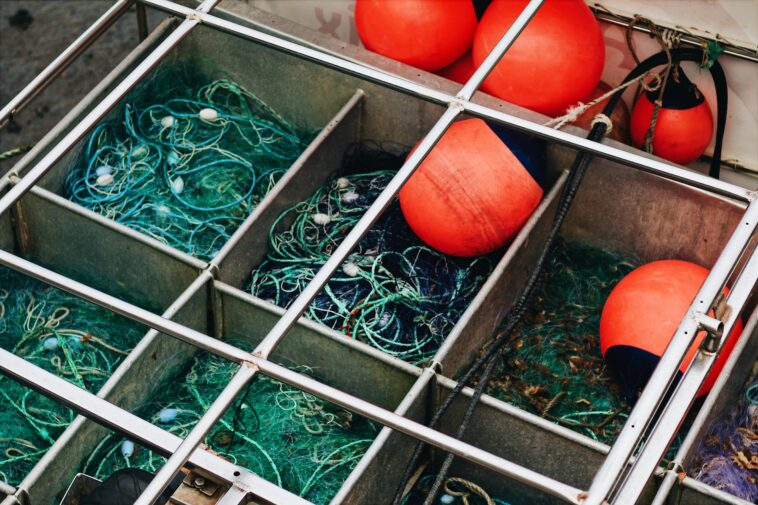
Farming fish is a lot like farming cattle, except your livestock is invisible most of the time, they live in a medium that can kill them if a pump fails, and they are incredibly slippery.
To the outsider, aquaculture looks peaceful. You see a pond, a few ripples, and maybe an automatic feeder spinning at sunset. But anyone in the industry knows that a peaceful surface hides a massive amount of logistics. Scaling up from a backyard hobby pond to a commercial operation requires serious infrastructure. You aren’t just managing water; you are managing biology, physics, and a lot of heavy lifting.
If you try to run a fishery with hardware store equipment, you are going to break your back, and more importantly, you are going to damage your product. Fish are delicate. A rough net can strip their slime coat, leading to fungal infections that wipe out your profit margin weeks after the harvest.
To keep your stock healthy and your operation efficient, you need to invest in professional-grade commercial fishing supplies that are designed to handle the specific rigors of aquaculture. Here is a breakdown of the gear that separates the amateurs from the pros.
1. Custom Seine Nets
The seine net is the combine harvester of the fish farm. It is your primary tool for gathering your crop. However, buying a generic fishing net is a mistake. Commercial seines need to be tailored to your specific pond bottom and fish species.
- Treated Netting: You want nets that have been dipped or treated to resist UV degradation and rot. A net that sits in the sun and water all day will become brittle and tear within a season if it isn’t treated.
- The Mud Line: If you have mud ponds (which most catfish or bass farms do), you need a seine with a heavy lead line or a mud roller to keep the bottom of the net down without digging into the muck. If the net floats up, you lose 20% of your harvest. If it digs in, you can’t pull it.
- Knotless Mesh: This is critical. Knotted nets are abrasive. They act like sandpaper on a fish’s skin. For commercial aquaculture, you want knotless nylon. It is softer and significantly reduces physical trauma to the fish during crowding.
2. Dissolved Oxygen Meters and Aeration
You can have the best nets in the world, but they won’t matter if your fish suffocate before you catch them. Oxygen is your most volatile variable. In the summer, warm water holds less oxygen. At night, algae stop producing oxygen and start consuming it. This can lead to a “morning crash” where you wake up to thousands of floating fish.
- The Meter: Do not guess. Do not look at the water color. You need a digital dissolved oxygen meter. You should be testing your ponds daily, especially at dawn when levels are lowest.
- Emergency Aeration: Electric paddlewheels are great, but what happens when a summer storm knocks out the power grid? Every commercial farm needs a PTO-driven aerator that can hook up to a tractor. When the electricity dies, that tractor is the only thing keeping your livestock alive.
3. Grading Equipment
If you put 10,000 fingerlings in a pond, they won’t all grow at the same rate. Three months later, you will have some aggressive shooters that are three times the size of the runts. If you are raising carnivorous species (like bass or trout), the big ones will eat the small ones. You are literally losing inventory to cannibalism. Even for non-carnivorous fish, uniform size is required by buyers. Restaurants don’t want one 5-pound fillet and one 8-ounce fillet.
Investing in a floating grader or a box grader allows you to sort fish by width efficiently. You dump a net full of fish into the box, and the smaller ones slip through the bars back into the water (or into a different tank), while the market-ready fish stay trapped. It automates quality control.
4. Heavy-Duty Dip Nets and Live Cars
Once the seine has crowded the fish, you need to move them. Standard aluminum pool skimmers will snap in half under the weight of wet fish. You need heavy-duty, commercial dip nets with reinforced D-frames and fiberglass or heavy aluminum handles. Furthermore, look at live cars or net pens. These are holding nets that sit in the pond. After seining, you often want to hold the fish in a net pen for 24 hours to let them purge their stomachs (which cleans the flavor) and calm down before transport. These pens need to be escape-proof and incredibly durable.
5. Transport Tanks and Agitators
Unless you are processing on-site (which is rare for small farms), you have to get the fish to the buyer alive. Hauling tanks are specialized pieces of engineering. They need to be insulated to keep the water temperature stable and baffled to prevent the water from sloshing the truck off the road. Inside the tank, you need 12-volt agitators or oxygen diffusers (hooked to an O2 tank). You are cramming a lot of biomass into a small box; without aggressive supplemental oxygen, the stress hormones will spike, and the fish will die in transit.
6. Waders
This seems minor until it is November, the water is 45 degrees, and you have a leak in the crotch of your waders. Aquaculture is a wet job. You will be waist-deep in water frequently. Cheap rubber waders will crack after one season of sun exposure. Invest in high-quality neoprene chest waders for the winter (for warmth) and breathable, tear-resistant waders for the summer. Also, look for “brier-proof” or reinforced legs, as pond banks are notorious for snagging gear.
Invest in Your Fishing Supplies
There is an old saying in this industry: “Buy nice or buy twice.” Salt, mud, sun, and fish slime are destructive forces. If you try to cut corners on your supplies, you will find yourself repairing nets at midnight or watching a cheap aerator burn out during a heatwave. Commercial fishing supplies are capital assets. When you buy a treated seine net or a calibrated grader, you are buying reliability. And when your entire livelihood is swimming around in a pond, reliability is the only thing that counts.